

MPW Birmingham Alumni: Sam
Each year, we take the opportunity to reconnect with our alumni, learning about their journeys in undergraduate studies and their evolving careers. This year Sam was one of them.
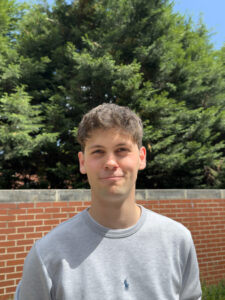
What are your memories of MPW?
I loved my year at MPW. Some of my fondest memories are from the required practical experiments in Physics. They were completely new to me, and getting hands-on with interesting experiments was something I found enjoyable. It was also one of the few times during my A-Levels that we worked in groups, which made the experience more engaging. Because many of us were new to practical work, there were plenty of funny moments that I still laugh about today.
By the end of the year, it was rewarding to see how much progress we had made and how many practical skills we had developed. I’ve gone on to use many of those skills in my university modules.
I also really enjoyed Further Maths lessons. We often began with challenging warm-up problems that were both thought-provoking and, surprisingly, quite relaxing. Sometimes we came up with overly complicated solutions, but they always made us laugh and helped us learn. The support and guidance from our tutors played a big part in helping us improve the way we approached problems.
How did you adapt to moving so far from home?
I was lucky to meet some great people early on at university. Getting out and socialising in the first few weeks was a great way to build connections, and that really helped me feel more at home. One of the benefits of spending an extra year at MPW was that it gave me time to practise cooking. University life can get busy and learning to cook from scratch while juggling everything else isn’t always easy. Having a few basic recipes already in mind helped me feel more settled and saved me a lot of time during the term.
Tell us a bit about the course.
I study Mathematics, and the course covers a wide range of topics, from medical statistics to complex subjects like planetary orbits. I really enjoy how the course combines theoretical work with practical applications. In later years, we’re able to specialise in areas that interest us. I’m planning to focus on financial mathematics because I have a strong interest in applied, real-world problems.
Which part was the most challenging?
Some parts of the course are incredibly abstract and can be quite difficult to understand. These topics are challenging, but the university provides a lot of support to help students with them. There is always someone available to explain the material in a simpler and more approachable way. Gaining a clear understanding of these concepts is a real achievement and feels very rewarding.
What plans do you have once your degree is complete?
Ever since I attended MPW, I’ve known that I want to become an actuary. Since starting university, I’ve been choosing modules related to that career path and have found myself enjoying the subject even more. Recently, I’ve also started to take an interest in academia, so I’m considering staying on for a master’s degree. After that, I’ll explore the opportunities available and decide which path to follow.
If you could offer prospective medicine students one piece of advice, what would it be?
The best advice I can give is to get comfortable with failure. When I started university, I was surprised by how low the average marks were on our first few assignments. This wasn’t due to a lack of effort, but because the questions were much more difficult than those at A-Level. The university also places a strong emphasis on how you present and structure your answers, which takes time to learn.
Fortunately, many of the early assignments don’t contribute to your final grade. They are designed to help you improve your problem-solving skills and understand how to approach questions effectively. Getting things wrong is part of the learning process. At degree level, you need to push yourself by attempting a lot of questions, and naturally, you will make mistakes. Over time, these mistakes lead to real improvement and a better understanding of the subject.